

The tradition and culture of Drniš have developed over long historical periods, which can still be seen today in its old streets, sites and everyday life.
The cultural identity is based on customs, music, dances and architecture that reflect life in the Dalmatian hinterland.
Heritage is preserved through museum collections, historical traces and events that connect the past with the present.
In Drniš, tradition is a natural part of the environment and way of life, without emphasis or significant deviation from its original forms.
The tradition of Drniš is shaped by history, everyday customs and cultural elements passed down through generations.
Share




Historical development and heritage
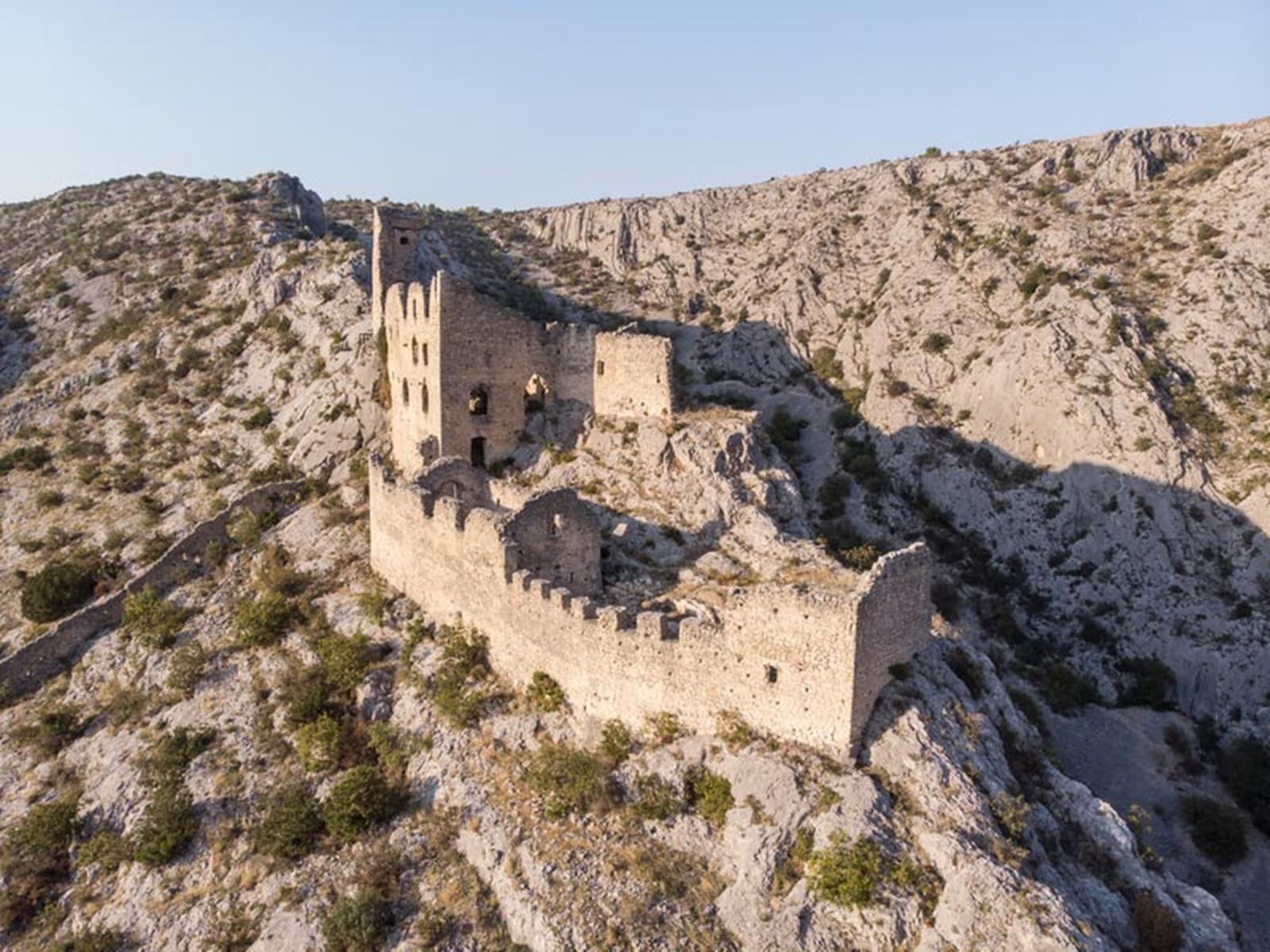
Drniš carries visible traces of the historical periods that shaped the town and its identity.
Throughout the centuries, Drniš was influenced by different cultures, which can be seen in the layout of the settlement, the remains of fortifications and old buildings. Historical sites, such as Gradina and parts of the old town, bear witness to periods when this area had a strategic role.
In the town’s layout and architecture, elements of medieval and later building phases can be recognised. It is a blend of layers that shows how the town changed while preserving the essential characteristics of the Dalmatian hinterland.
Such historical heritage gives Drniš a recognisable character simple, calm and connected to its surrounding landscape.
Cultural practices and traditional expressions
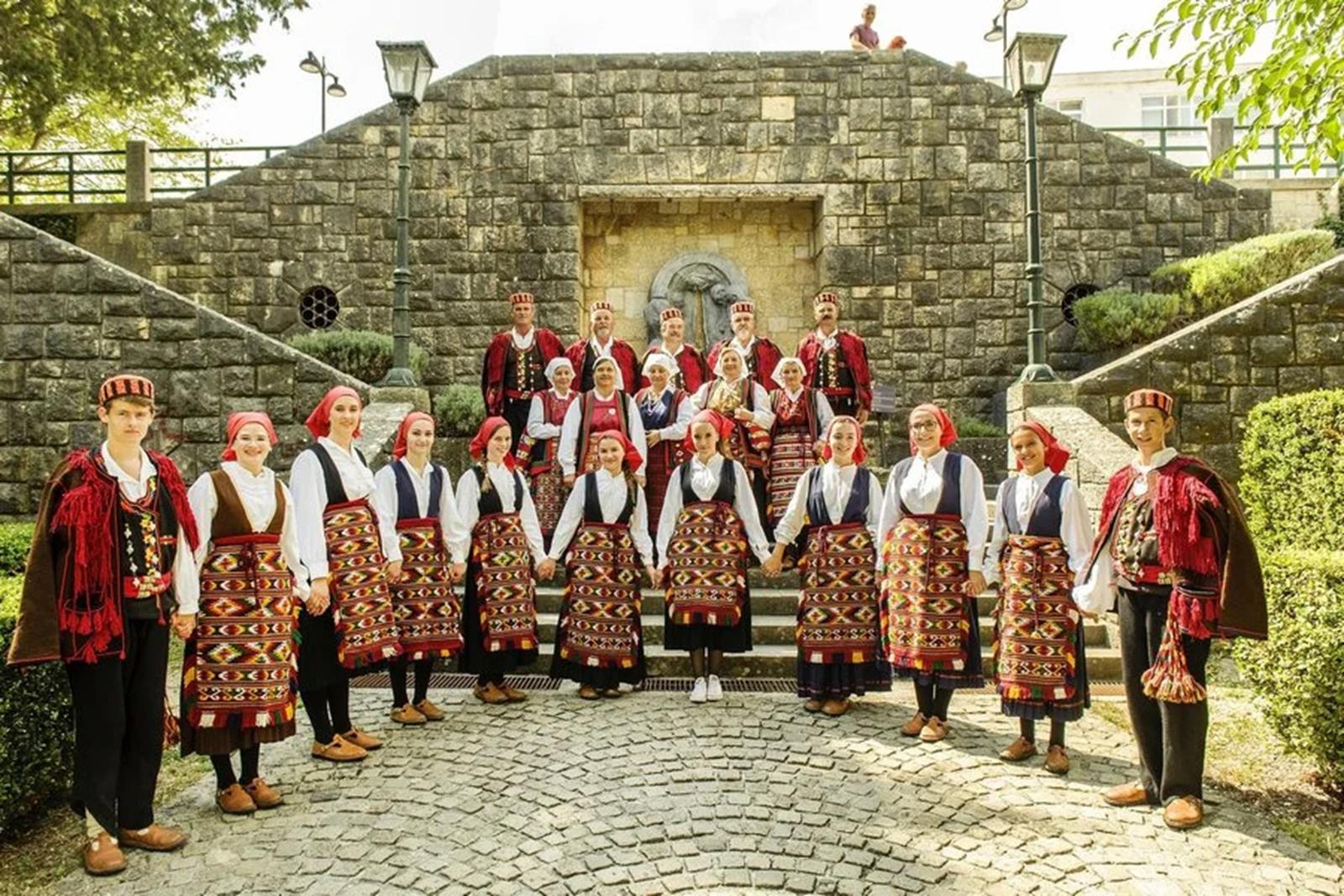
The culture of Drniš relies on local songs, dances, customs and forms of expression that originate from everyday life.
Traditional musical and dance forms characteristic of the Dalmatian hinterland are still nurtured in the Drniš area. Songs, styles of singing and group dances bring the community together and represent part of the region’s identity.
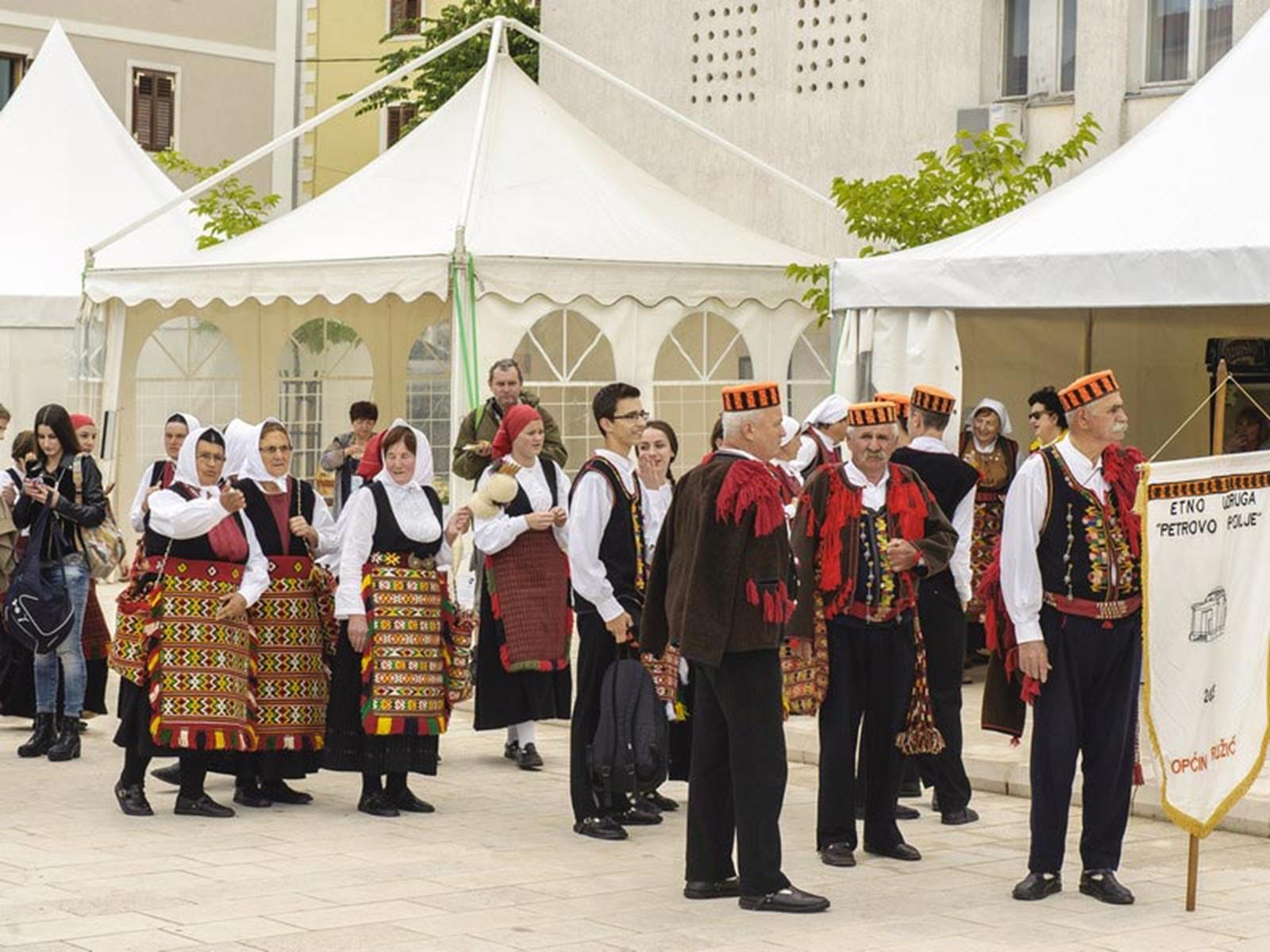
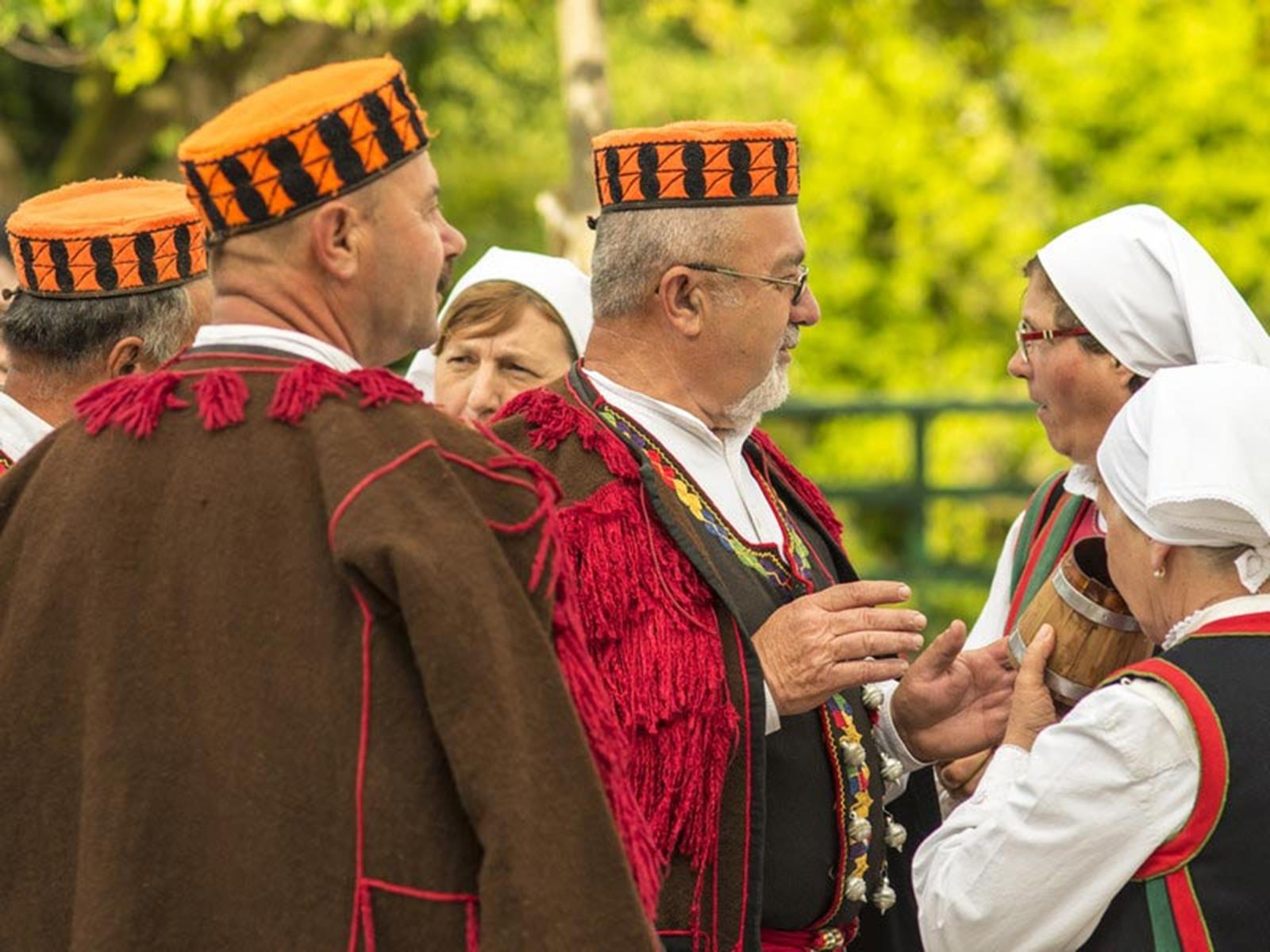
Folk costumes, embroidery motifs and old customs are still present in local events and cultural gatherings. Although they are not used in everyday life, they remain a visible part of the city’s cultural identity.
These elements of tradition are not presented as a tourist attraction; instead, they are preserved and passed on through local groups and communities that continue to maintain these customs.
Heritage in contemporary life
In Drniš, traditional elements blend with contemporary cultural content and practices.
Museum collections, public spaces and local events provide insight into different parts of Drniš’s history and cultural development. Through these settings, visitors can learn about everyday life in past periods and the way of living that shaped the town.
Contemporary culture here is often connected with local themes: the land, landscape, customs and history remain present in public programmes and events. This combination of old and new gives the town a stable identity.
In Drniš, cultural heritage is not perceived as a separate segment, but as a part of the community that gradually develops and adapts while maintaining its connection with past generations.